


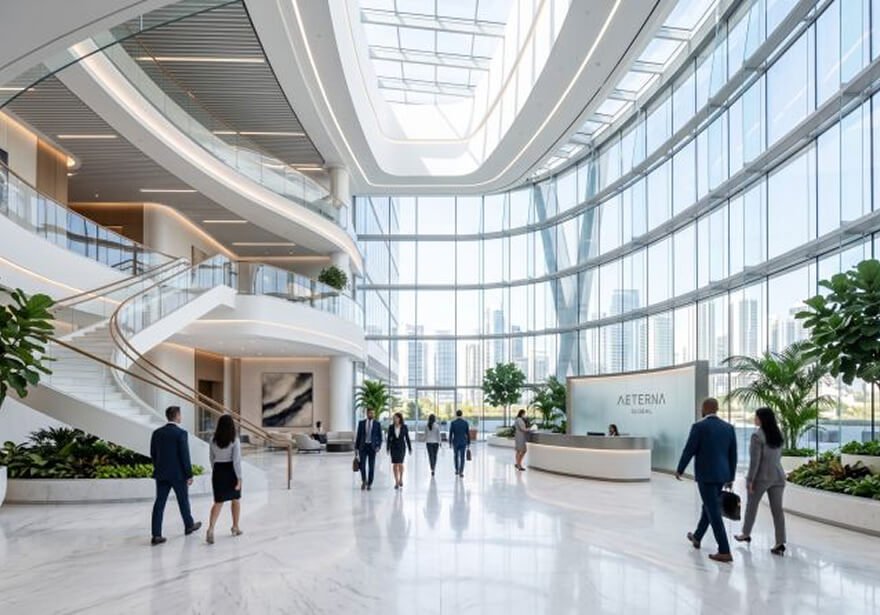
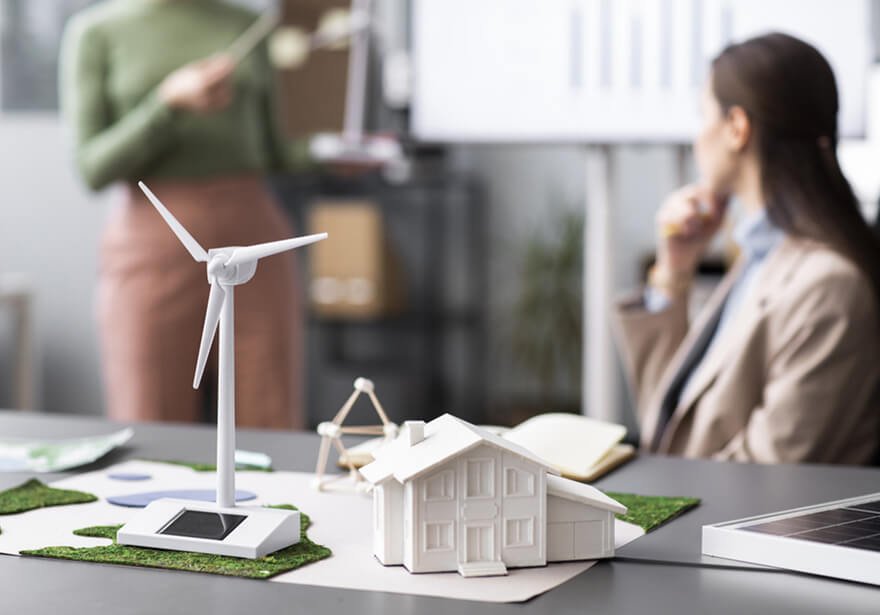
Sustainable architecture focuses on reducing environmental impact while creating comfortable and efficient spaces. Strategies such as building orientation, natural daylight, passive ventilation, energy-efficient systems, and responsible material selection can contribute to better building performance.
The local climate and site conditions play an important role in sustainable design. Architects can respond to sunlight, wind, temperature, rainfall, and surrounding landscape when developing the building’s form and orientation. These passive strategies can reduce dependence on mechanical systems and improve indoor comfort.
Sustainability is also connected to the entire life cycle of a building. Durable materials, efficient systems, adaptable spaces, and thoughtful maintenance can help extend a building’s useful life. By considering performance from the beginning, sustainable design can become an integral part of good architecture rather than an afterthought.
Sustainable architecture focuses on reducing environmental impact while creating comfortable and efficient spaces. Strategies such as building orientation, natural daylight, passive ventilation, energy-efficient systems, and responsible material selection can contribute to better building performance.
The local climate and site conditions play an important role in sustainable design. Architects can respond to sunlight, wind, temperature, rainfall, and surrounding landscape when developing the building’s form and orientation. These passive strategies can reduce dependence on mechanical systems and improve indoor comfort.
Sustainability is also connected to the entire life cycle of a building. Durable materials, efficient systems, adaptable spaces, and thoughtful maintenance can help extend a building’s useful life. By considering performance from the beginning, sustainable design can become an integral part of good architecture rather than an afterthought.




Leave a Reply